Congestion control
Congestion happens when too many packets are sent through a network, so it starts to reach its limit.
Packet retransmission:
- fixes a symptom of network congestion:
- a segment loss resulting from the overflowing of router buffers
- but it does not fix the cause:
- too many sources sending data too fast at the same time
To treat the cause, mechanisms are needed to slow down or control how fast senders transmit data.
The costs of congestion
What happens as hosts increase their transmission rate and the network becomes congested?
Rising queueing delay
Two senders (hosts A and B) each send data over a single shared link to their destinations:
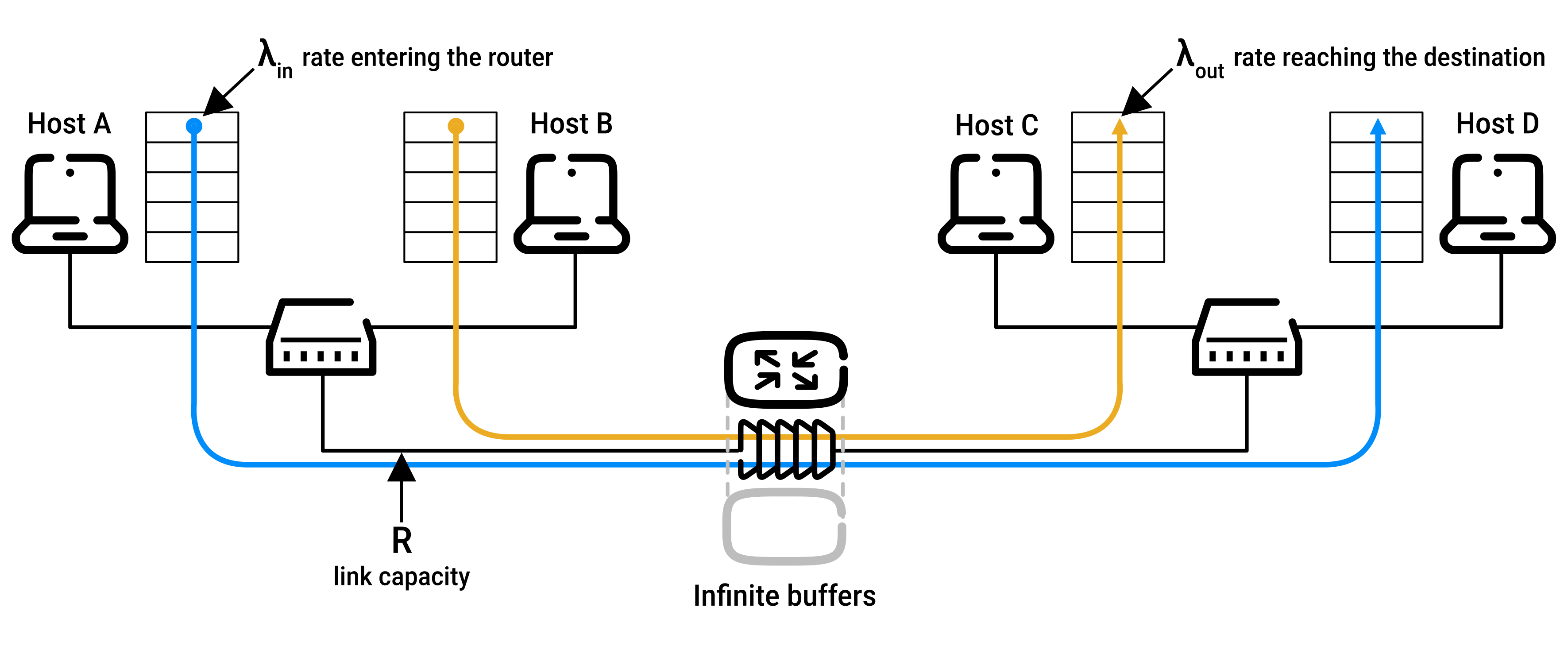
With:
- \( \lambda \) (lambda): data rate (bytes/sec)
- \( \lambda_{in} \): rate entering the router
- \( \lambda_{out} \): rate reaching the destination
- \( R \): link capacity (bytes/sec)
Assumptions:
- both hosts:
- send data into a socket at a constant rate \( \lambda_{in} \) indefinitely
- use a simple transport protocol (no flow control, error control, or congestion control)
- the router has unlimited buffer space
Throughput vs. delay:
| Standpoint | Explanation | Diagram |
|---|---|---|
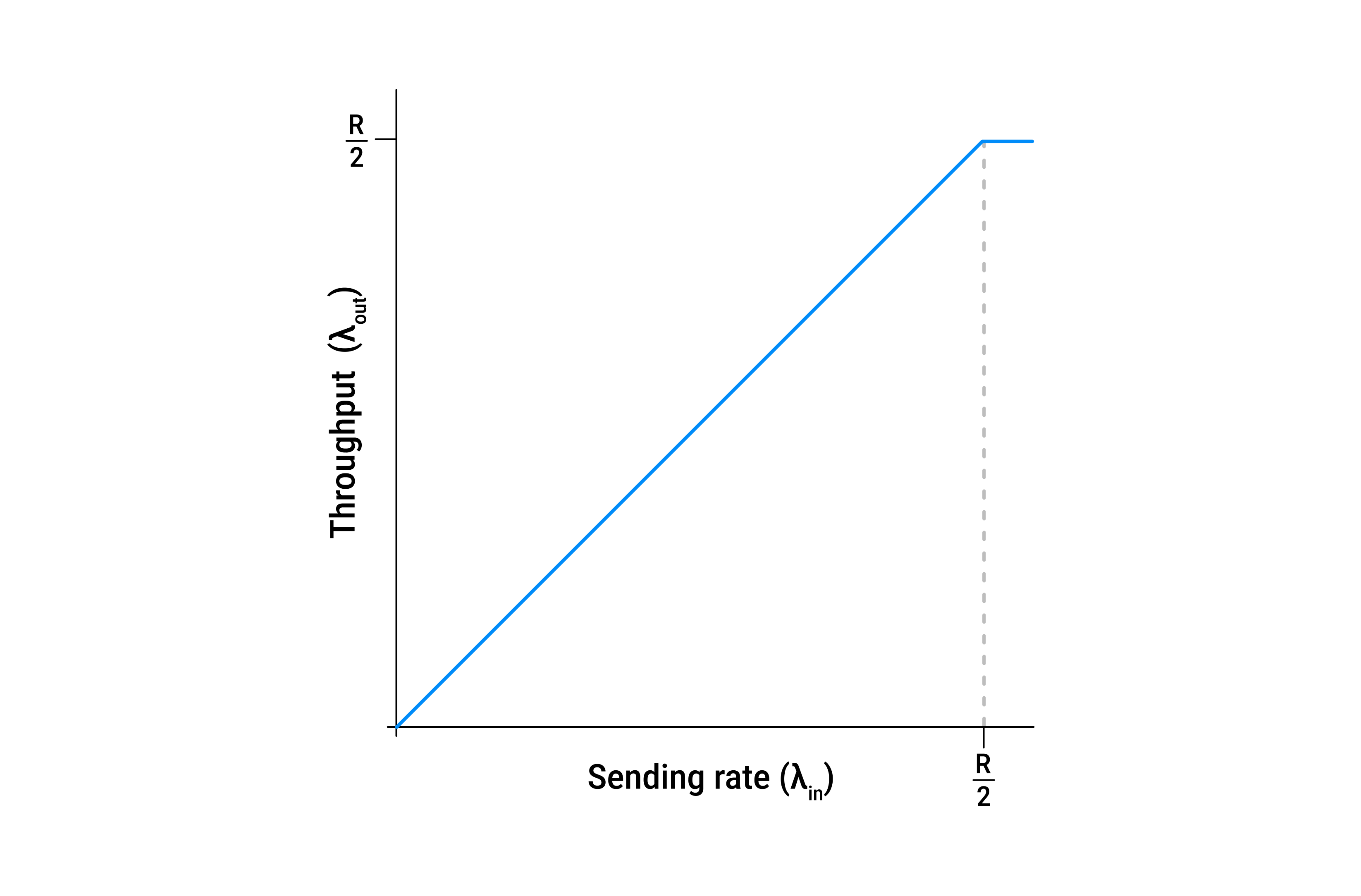
Throughput (débit) |
If each sender transmits at \( \le R/2 \):
If each sender transmits at \( > R/2 \):
So no matter how fast they send, each host is limited to \( R/2 \) throughput. |
 |
Delay (latency) |
As sending rate approaches \( R/2 \):
If sending rate exceeds \( R/2 \):
|
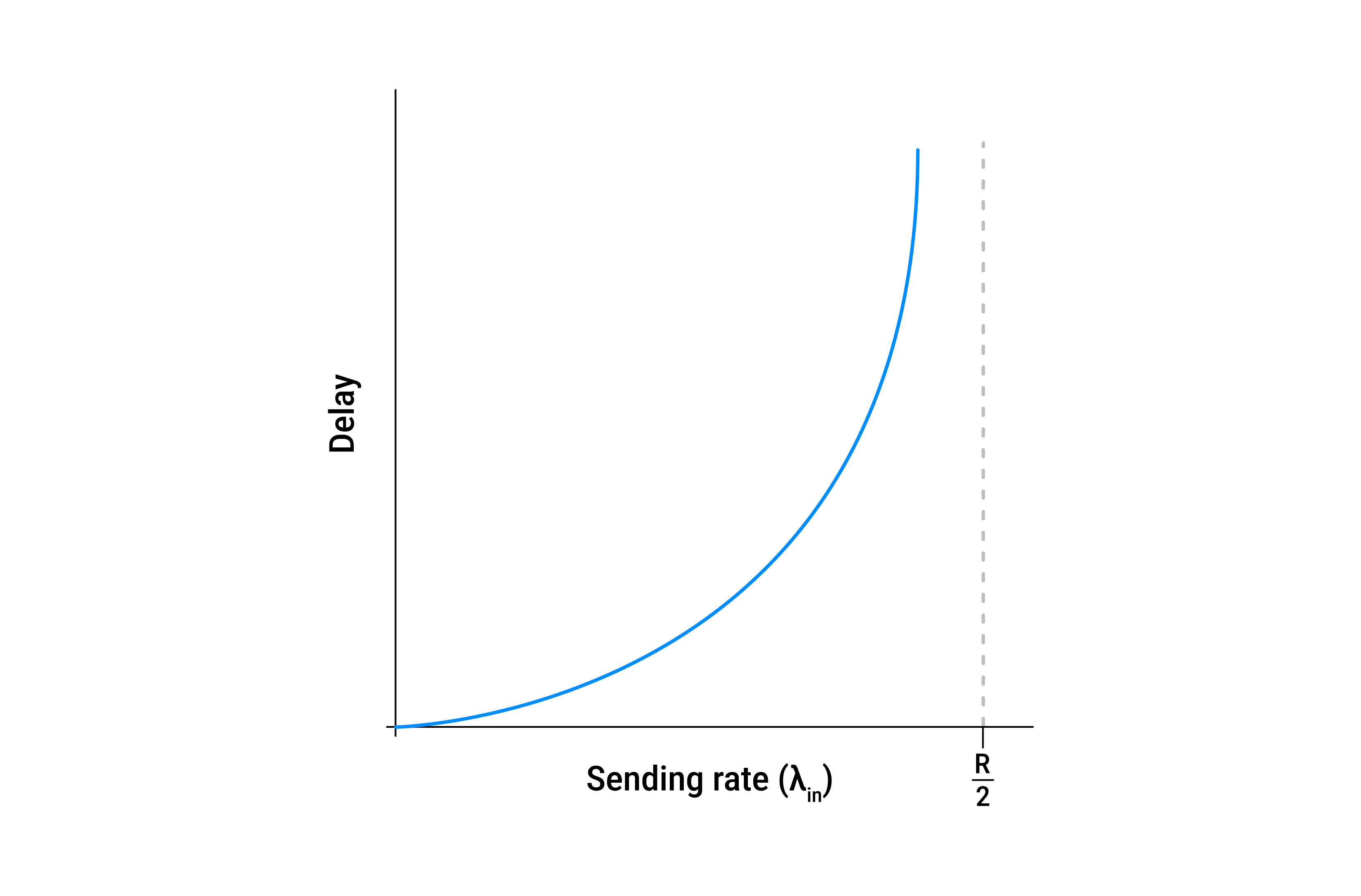 |
Achieving a per-connection throughput of \( R/2 \):
- might be ideal from a throughput standpoint (because the link is fully utilized)
- but it is far from ideal from a delay standpoint
Cost of congestion: when traffic nears link capacity, queuing delays grow rapidly.
Losses and unnecessary retransmissions
Now we assume:
- router buffers are finite, so packets are dropped when the buffer is full
- connections are reliable: if a packet is dropped, the sender will retransmit it
Because of retransmissions, we distinguish two rates:
- \( \lambda_{in} \): rate of original data sent by the application (bytes/sec)
- \( \lambda'_{in} \): rate of all packets sent into the network by the transport layer, including retransmissions (bytes/sec), sometimes called the offered load
The performance now depends strongly on how retransmission is performed:
- if
Host Ais able to magically determine whether or not a buffer is free in the router:- it sends a packet only when a buffer is free
- no loss occurs
- \( \lambda_{in} = \lambda'_{in} \)
-
if
Host Aretransmits only after correctly detecting loss:- i.e. it sets its timeout large enough to be virtually assured that a packet that has not been acknowledged has been lost
Cost of congestion: the sender must perform retransmissions in order to compensate for dropped (lost) packets due to buffer overflow.
-
if
Host Atimes out prematurely and retransmits a packet that has been delayed in the queue but not yet lost:- the receiver discards the retransmission (it needs only one copy of this packet)
Cost of congestion: unneeded retransmissions by the sender in the face of large delays may cause a router to use its link bandwidth to forward unneeded copies of a packet.
Wasted transmission due to downstream packet loss
Now, four hosts send packets, each over two overlapping routers.
All hosts have the same input rate \( \lambda_{in} \).
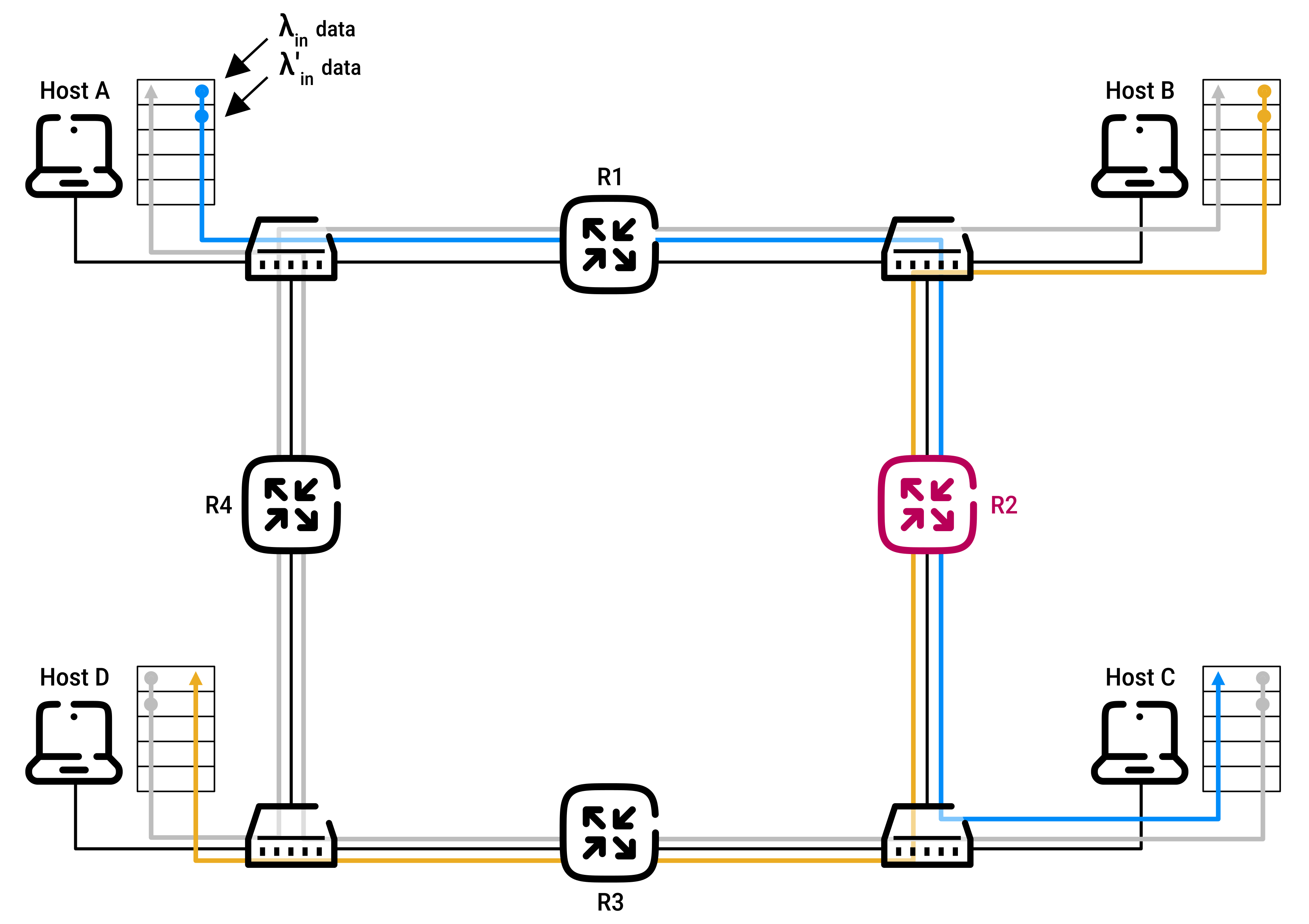
Example:
- the
A–Cflow traversesR1 → R2 - along the way, it competes for resources with other flows (
D–BsharesR1, andB–DsharesR2).
Under low load (\( \lambda_{in} \) small):
- buffer overflows are rare
- throughput ≈ offered load
Under high load (\( \lambda_{in} \) large):
- at
R2, bothA–CandB–Dflows compete for buffer space - as load increases:
- more
B–Dpackets occupy the buffer - fewer
A–Cpackets get through
- more
- in extreme cases:
- any free buffer slot is immediately taken by a
B–Dpacket - the throughput of the
A–Cconnection atR2goes to zero
- any free buffer slot is immediately taken by a
In the high load scenario outlined above:
- whenever a packet is dropped at a downstream router
- the upstream router(s) have already spent capacity forwarding it
- that transmission effort is wasted if the packet is eventually discarded
- packets that have already traversed more hops may deserve higher priority than new ones
Packet loss due to congestion wastes capacity:
Cost of congestion: when a packet is dropped along a path, all upstream resources used to carry it are wasted.
Approaches to congestion control
Two approaches to congestion control are taken in practice:
- end-to-end congestion control:
- the network layer provides no explicit support to the transport layer
- presence of network congestion must be inferred on observed network behavior (e.g. packet loss and delay)
- network-assisted congestion control:
- routers provide explicit feedback to the sender and/or receiver regarding the congestion state of the network
- this feedback may be as simple as a single bit indicating congestion at a link
 Joint
Joint