4G/5G mobility management
Mobility management example
Consider a passenger traveling in a car.
The passenger's smartphone:
- connects to a visited 4G/5G network
- starts streaming HD video from a remote server
- then moves from one base station to another
This process consists of four stages:
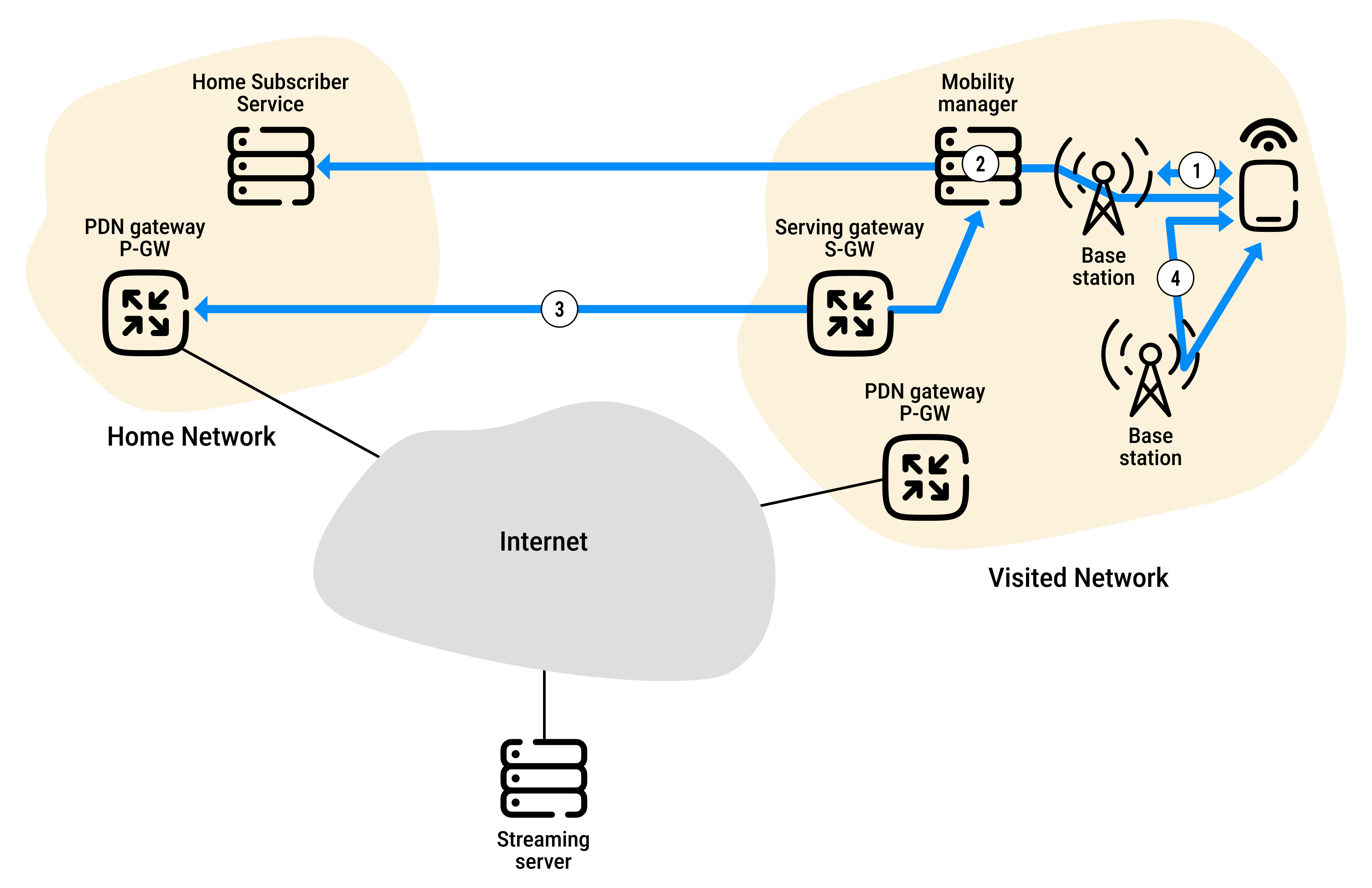
1. Base station association
The mobile device:
- listens for nearby base stations
- gathers information about them
- selects a suitable base station in the visited network
- establishes a control-signaling channel
The device identifies itself using a temporary identity when available. The permanent subscriber identity (IMSI in 4G, SUPI in 5G) is only used when required.
2. Control-plane configuration
Once the device is attached, the visited and home networks configure the control plane:
- the base station in the visited network contacts its MME (Mobility Management Entity)
- using the IMSI, the MME retrieves subscriber information, including:
- authentication credentials
- encryption keys
- available network services
- the device and network mutually authenticate to ensure that:
- the visited network is sure about the identity of the mobile device
- the device can authenticate the network to which it is attaching
- the MME informs the HSS that the subscriber is now located in the visited network
- the base station and device negotiate parameters for the upcoming data-plane connection
The home network now knows which visited network is serving the mobile device and can establish data forwarding.
3. Data-plane configuration
Next, the network creates forwarding tunnels for user traffic.
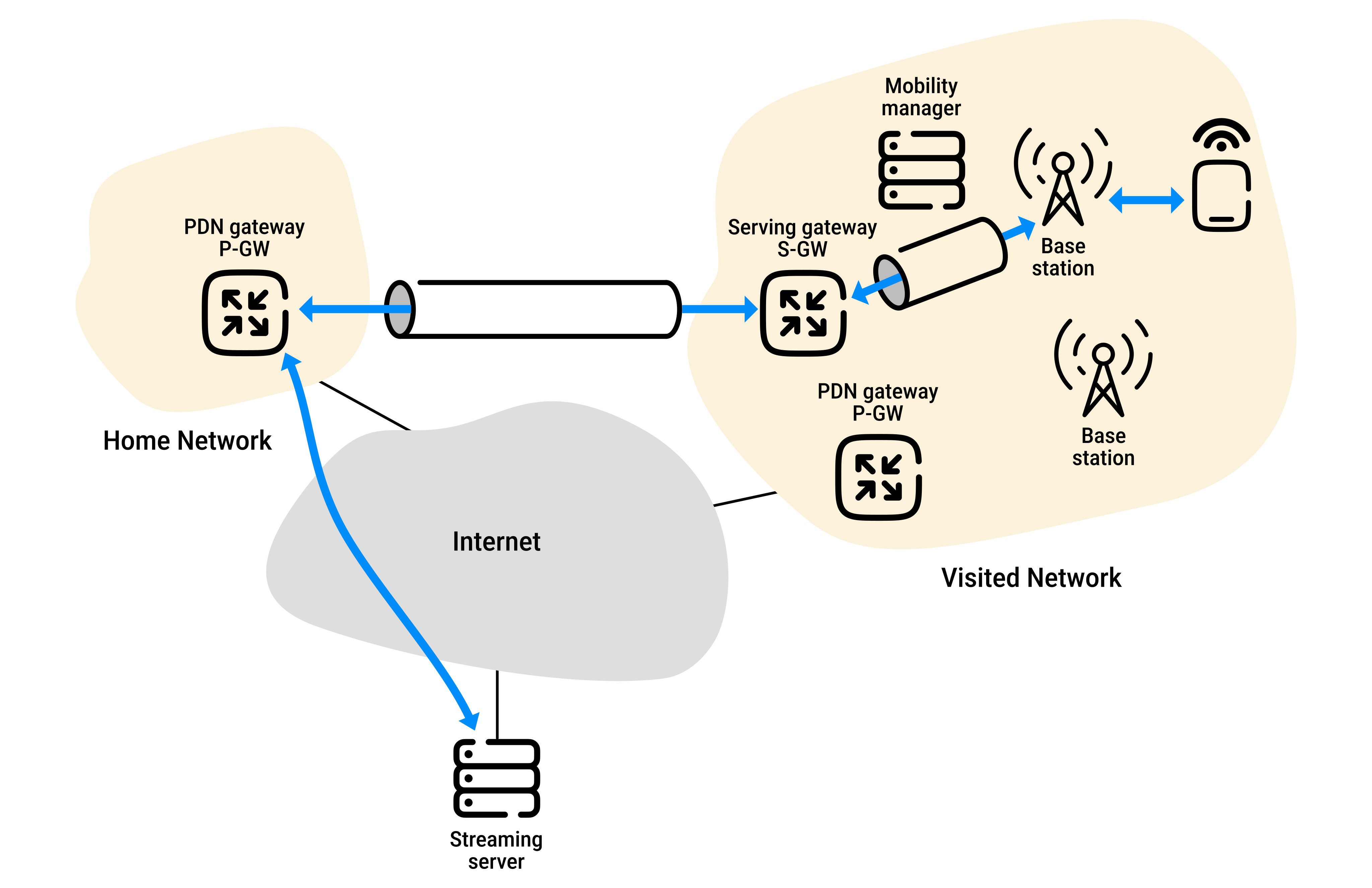
Two tunnels are established:
- Base station → Serving Gateway (SGW) in the visited network
- Serving Gateway → PDN Gateway (P-GW) in the home network
These tunnels allow the smartphone and the streaming server to exchange IP packets using indirect routing.
4G/5G networks use the GPRS Tunneling Protocol (GTP).
Each GTP tunnel endpoint uses a Tunnel Endpoint Identifier (TEID) that:
- identifies the tunnel
- allows multiple traffic flows to share the same physical connection (multiplexing and demultiplexing)
After the tunnels are established, the mobile device can exchange packets with the Internet through the home network's P-GW.
4. Handover management
A handover occurs when the mobile device moves from one base station to another.
The basic handover procedure is similar whether the device is in its home network or roaming in a visited network:
- before handover, datagrams are forwarded to the mobile through a source base station
- after handover, datagrams are forwarded to the mobile through a target base station
Handover
When is a handover triggered?
The current (source) base station decides whether a handover is needed.
Common reasons include:
- weakening radio signal
- congestion in the current cell
- better service available from a neighboring base station
The decision may use:
- signal measurements reported by the mobile device
- measurements of nearby base stations
- current traffic load
- other implementation-specific factors
The 4G/5G standards do not specify the algorithm used to decide when a handover should occur.
Handover procedure
Steps involved when a source base station decides to hand over a mobile device to a target base station:
| Step | Description |
|---|---|
Step 1: Select a target |
The source base station selects a target base station and sends a Handover Request. |
Step 2: Reserve resources |
The target base station:
Because resources are reserved in advance, the mobile device does not need to perform the full association procedure again. |
Step 3: Move the device |
The source base station receives the ACK and informs the mobile device about the target base station's identity and channel access information. The device begins communicating with the target base station. From the mobile device's perspective, the handover is complete. |
Step 4: Forward in-flight packets |
The source base station:
This minimizes packet loss while the network updates its state. |
Step 5: Update the tunnel |
The target base station informs the MME that it will be the new base station servicing the mobile device. The MME reconfigures the tunnel between the Serving Gateway and the new base station. |
Step 6: Release old resources |
After the new tunnel is active, the target base station confirms completion to the source base station. The source base station then releases resources associated with the mobile device. |
Step 7: Resume normal operation |
The target base station now delivers:
|
The handover is now fully complete.
Mobile IP
The Internet does not have a widely deployed IP-layer infrastructure that supports mobile users moving between different networks.
Such a system would allow users to:
- move between different IP networks
- keep the same IP address
- and maintain active TCP connections while moving
This is not because technical solutions are unavailable.
The protocols that provide IP-layer mobility are known as Mobile IP.
Its limited adoption is mainly due to deployment complexity, limited business demand, and the availability of alternative mobility solutions.
 Joint
Joint