The network core
The network core is the mesh of packet switches and links that interconnects the Internet's end systems:
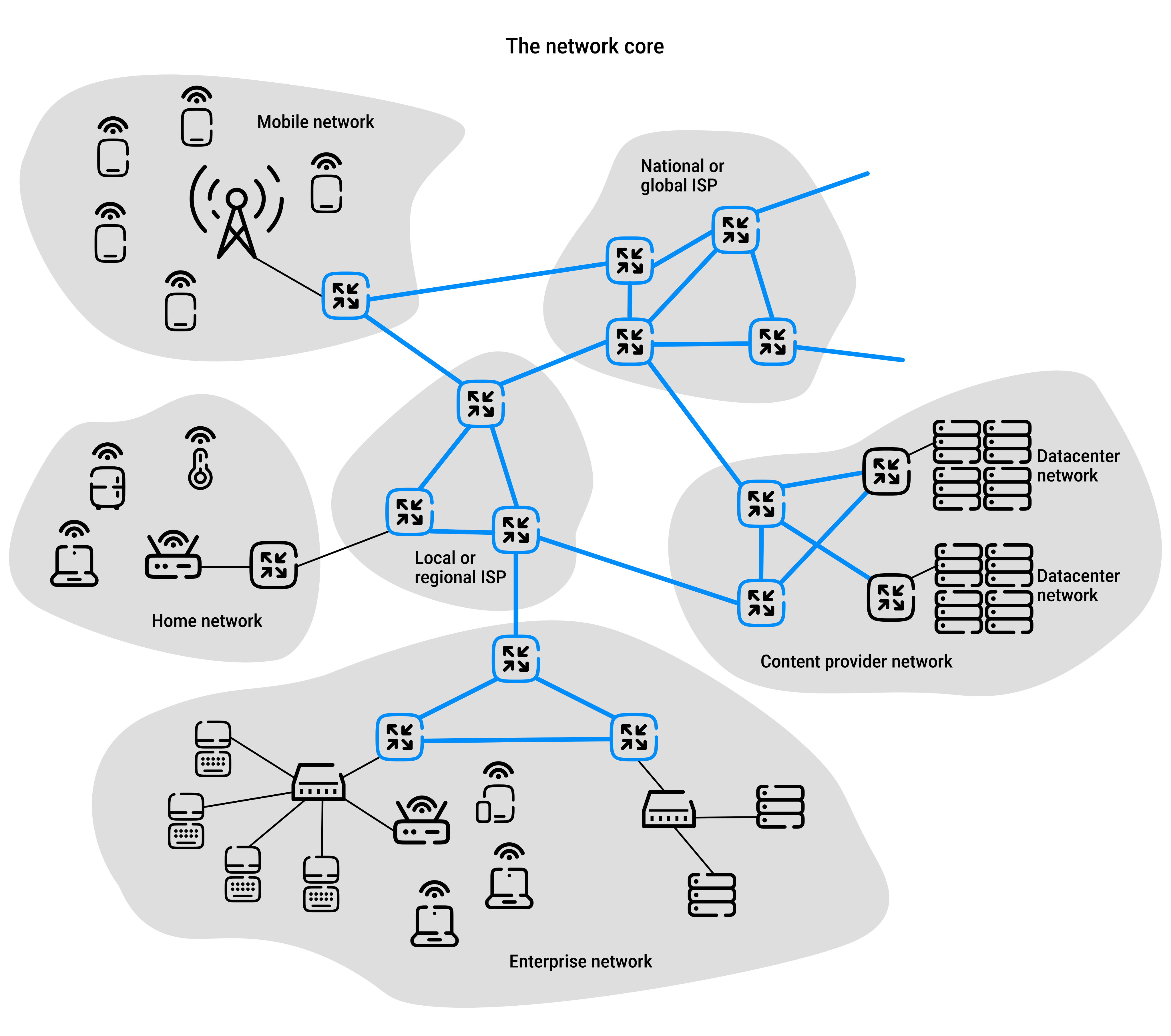
Packet switching
In a network application, end systems exchange messages which carry data.
Long messages are divided into smaller units called packets:
- they travel from source to destination through communication links and packet switches
- predominant types of packet switches are:
- routers
- link-layer switches
Store-and-forward transmission
Most packet switches use store-and-forward transmission because they must receive and process the entire packet (such as checking for errors and determining where to send it) before forwarding it to the next link.
This means that even if part of a packet has arrived, a packet switch waits until the full packet is received before sending it onward.
Due to the sequential transmission and forwarding process, packet switching with store-and-forward introduces delay.
Delays scale with the number of links and packet size.
Queuing delays and packet loss
Each router has output buffers for its outgoing links:
- when a packet arrives but the link is busy
- it must wait in the buffer
- causing queuing delays
These delays vary based on network congestion.
If the buffer is full when a new packet arrives:
- packet loss occurs
- either the new packet or one already in the queue is dropped
Forwarding tables and routing protocols
How routers determine which link to forward a packet to?
- each end system has a unique IP address
- when a packet is sent, the destination IP address is included in its header
- as the packet moves through the network, each router:
- examines the destination address
- and uses a forwarding table to decide which outbound link to use next
- the forwarding table maps destination addresses (or parts of them) to specific links
Forwarding tables are not manually configured:
- they are automatically set using routing protocols
- which compute optimal paths (e.g., shortest paths) through the network
- and update the routers' forwarding tables accordingly
Circuit switching
Circuit switching is one of two main approaches to data transmission in networks (the other being packet switching).
In circuit-switched networks (such as traditional telephone systems):
- network resources (like bandwidth and buffer space) are reserved in advance for the entire duration of a communication session
- this ensures a dedicated transmission rate and predictable performance
- similar to making a reservation at a restaurant:
- you may need to plan ahead
- but once there, you're served without delay
In contrast, packet-switched networks like the Internet do not reserve resources:
- data is sent in packets that may wait in queues if a link is congested, leading to variable delays and no guaranteed transmission rate
- the Internet uses a best-effort delivery model without performance guarantees
Industry trend:
- networks are increasingly shifting toward packet switching
- even for traditional voice services (e.g., international calls)
A network of networks
End systems connect into the Internet via an access ISP.
But the access ISPs themselves must be interconnected.
This is done by creating a network of networks.
To understand today's Internet network structure, let's incrementally build a series of network structures to interconnect all access ISPs so that all end systems can send packets to each other:
| Structure | Description | Key Points |
|---|---|---|
Naive Solution |
Every access ISP connects directly to every other access ISP forming a full mesh network |
|
Network Structure 1 |
All access ISPs connect to one global transit ISP |
|
Network Structure 2 |
Multiple competing global transit ISPs serve the many access ISPs |
|
Network Structure 3 |
Multi-tier ISP hierarchy |
|
Network Structure 4 |
Ecosystem closely resembling today's Internet |
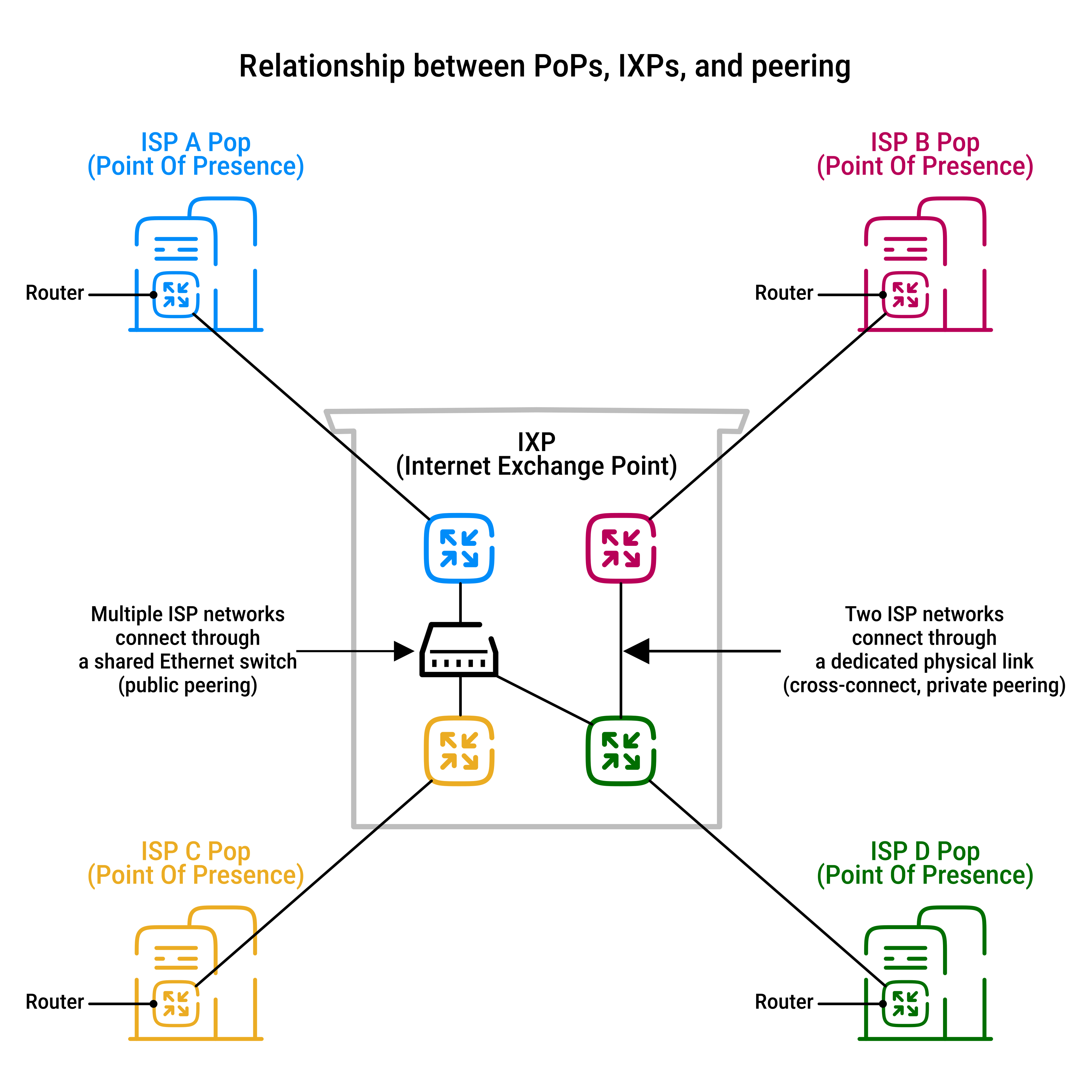
|
Network Structure 5 |
Modern Internet |
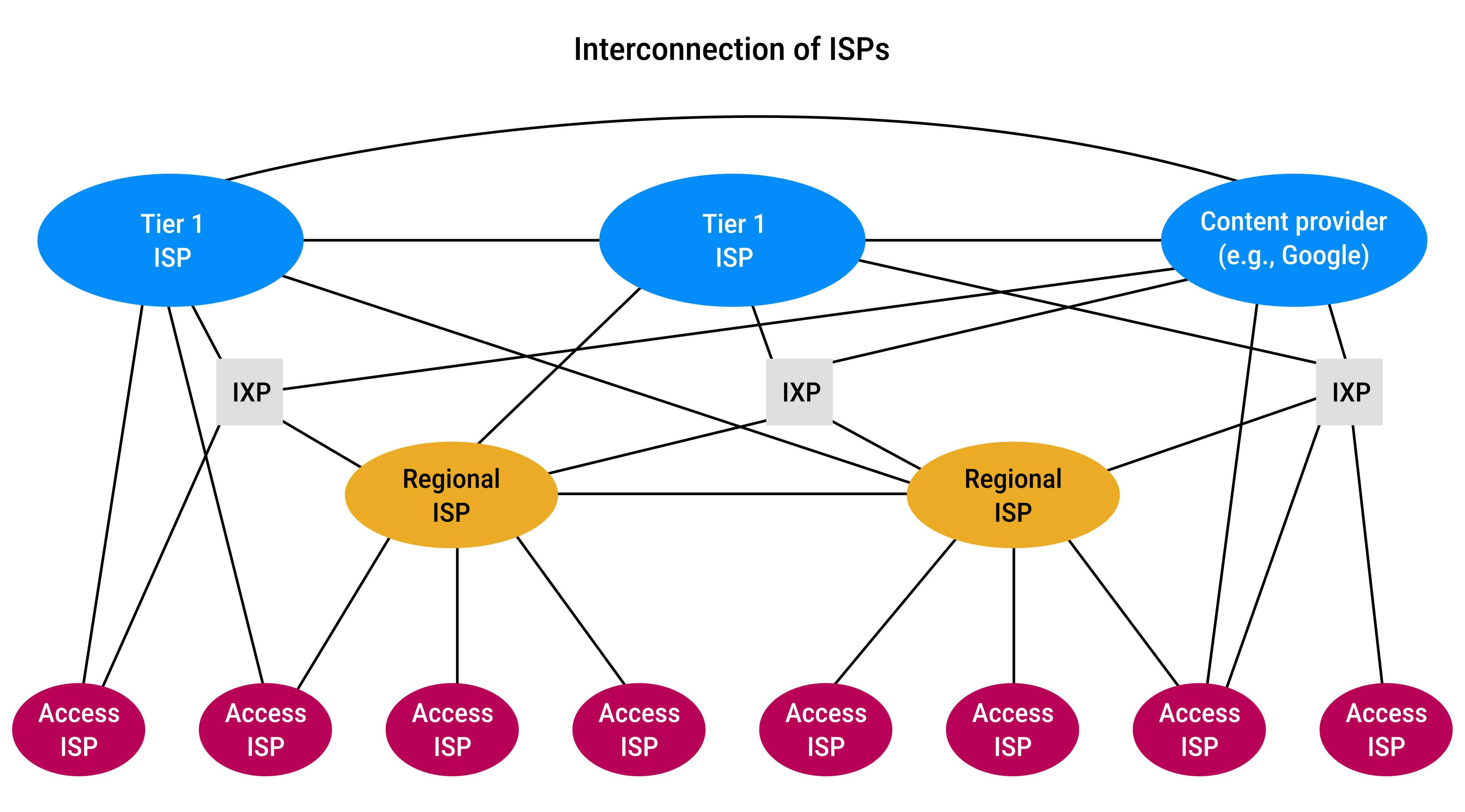
|
Today's Internet is a complex "network of networks":
- made up of a small number of Tier-1 ISPs
- or Internet backbone providers
- e.g., Lumen Technologies, Orange, NTT Communications
- and hundreds of thousands of lower-tier ISPs
Lower-tier ISPs:
- connect to higher-tier ISPs, which also interconnect among themselves
- are customers of higher-tier ISPs
Large content providers have built their own networks.
Users and large content providers are customers of lower-tier ISPs.
 Joint
Joint