Introduction to wireless networks
A wireless network is a computer network where devices communicate using radio waves, infrared, or other wireless signals instead of physical cables.
It introduces different networking challenges than wired networks.
Although the Internet protocols (IP, TCP, HTTP, etc.) are largely the same, the physical and link-layer is very different.
Elements of a wireless network
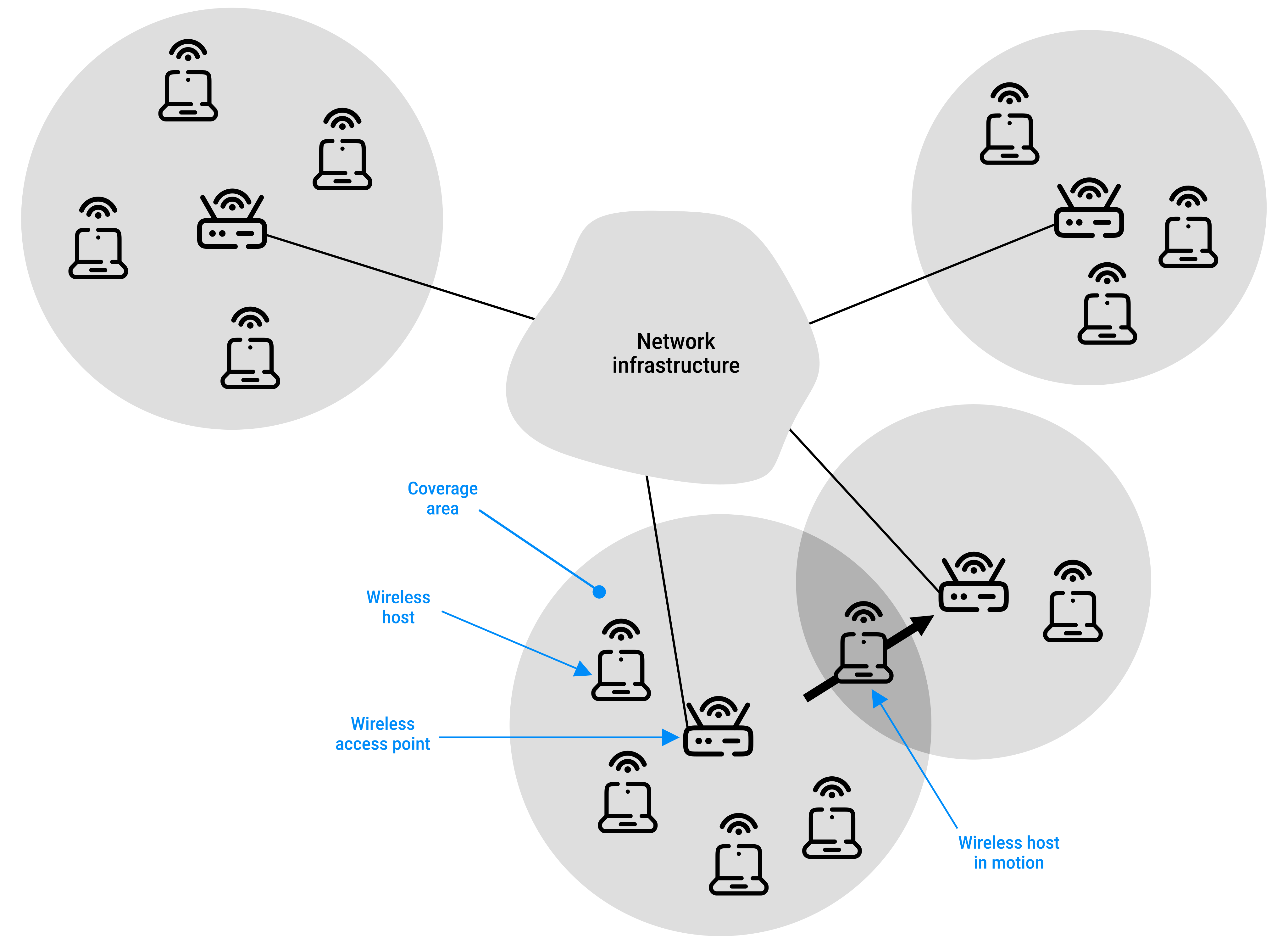
| Element | Description | Examples/Notes |
|---|---|---|
|
Wireless hosts |
Devices that communicate over a wireless network. They may be stationary or mobile. |
|
|
Wireless links |
A communication channel that connects a wireless host to either:
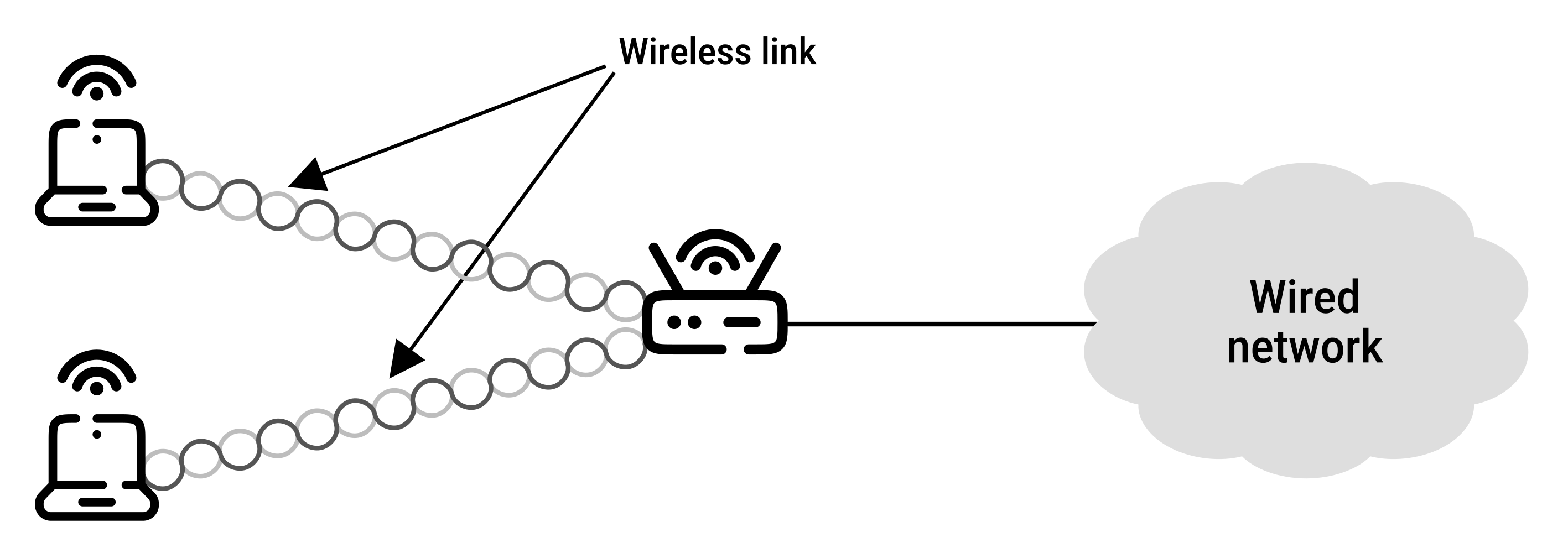
|
Different wireless technologies provide different:
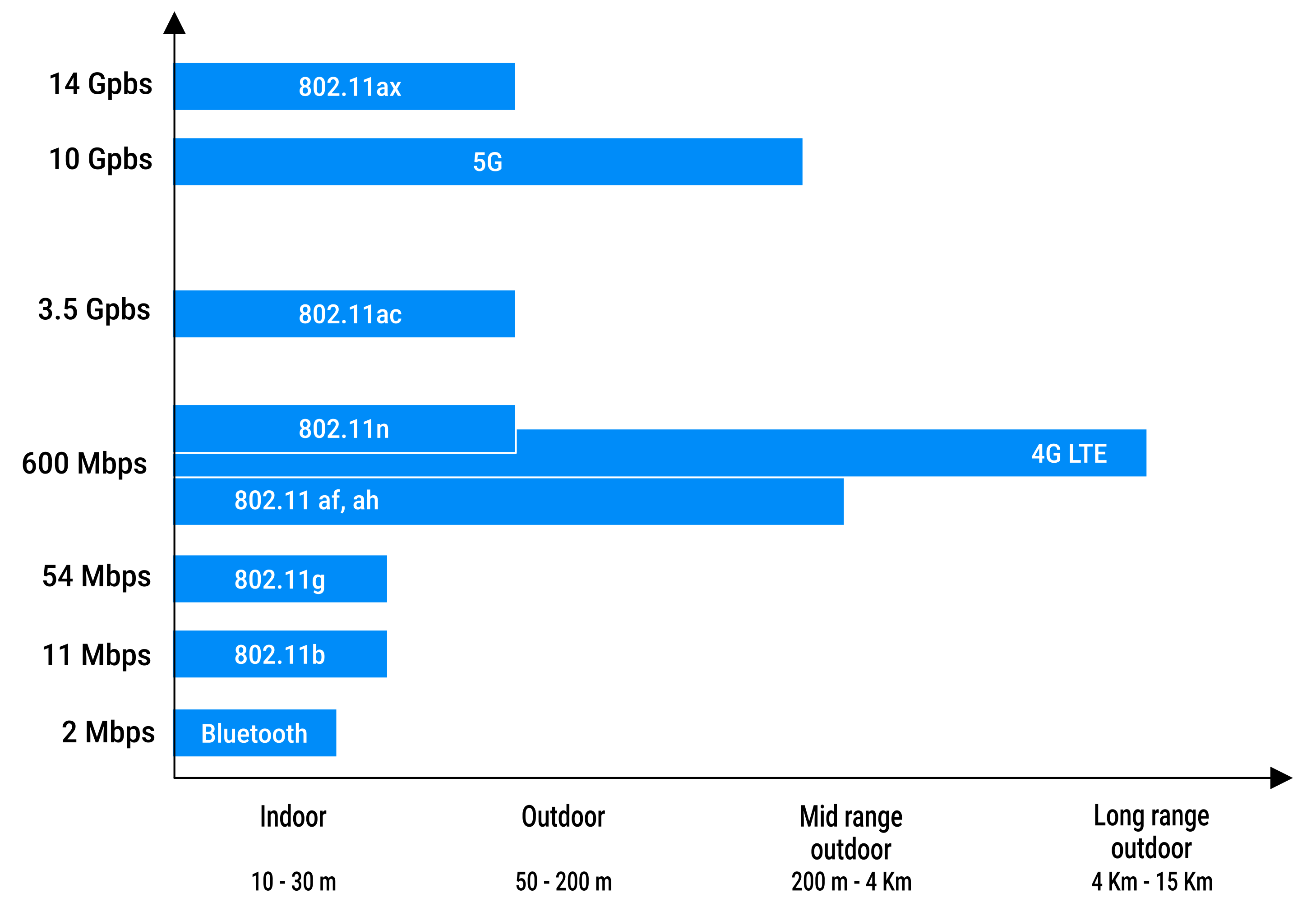
|
|
Wireless access points (base stations) |
Connect wireless hosts to the rest of the network. Responsibilities include:
|
|
|
Network infrastructure |
The larger network with which a wireless host may wish to communicate. |
The Internet |
Classifying wireless networks
Wireless networks can be classified using two criteria:
- number of wireless hops:
- single-hop: a packet crosses one wireless link
- multi-hop: a packet passes through one or more intermediate wireless devices before reaching its destination
- presence of infrastructure:
- infrastructure-based: the network includes a base station
- infrastructure-less: the network has no base station
Types of wireless networks:
| Type | Description | Examples / Notes |
|---|---|---|
|
Single-hop / infrastructure-based |
This is the most common type of wireless network:
|
|
|
Single-hop / infrastructure-less |
|
Bluetooth networks |
|
Multi-hop / infrastructure-based |
|
|
|
Multi-hop / infrastructure-less |
|
this class of networks is known as mobile ad hoc networks (MANETs) |
We will focus exclusively on single-hop, infrastructure-based wireless networks.
 Joint
Joint